Korean Jogakbo (Patchwork) Geometry: Asymmetric Grid Systems for Modern UI/UX Wireframing
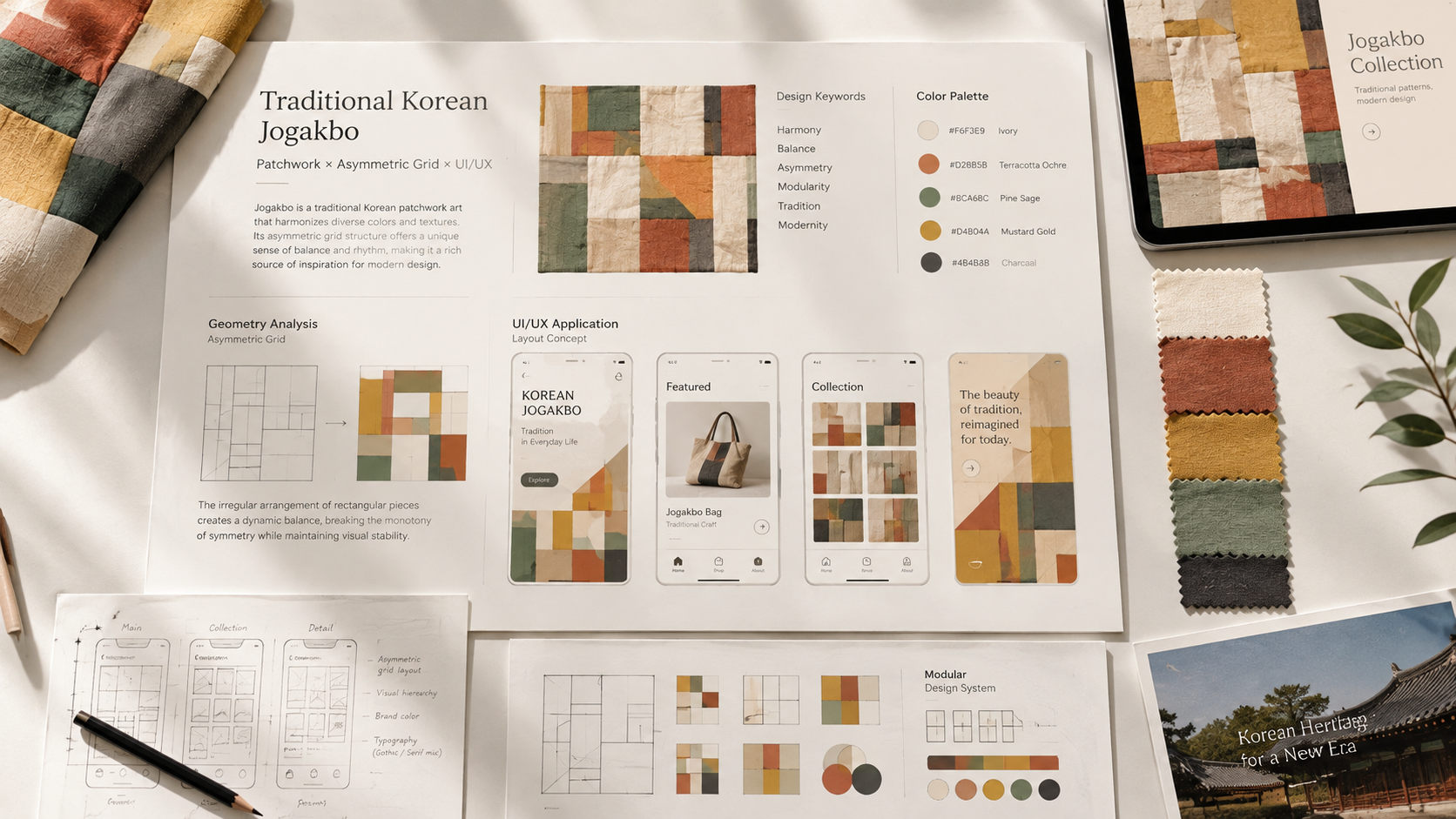
Modern UI/UX design is heavily reliant on rigid, symmetrical grid frameworks like the 12-column system. However, looking back at historical Korean Jogakbo (patchwork wrapping cloths) reveals a masterclass in dynamic, asymmetric grid layouts that feel remarkably organic and engaging. For digital interface designers seeking to break away from monotonous dashboard layouts, Jogakbo geometry provides an innovative framework for fluid content cards, modular components, and asymmetric wireframing.
Key Cultural Philosophy: Resourceful Asymmetry, Modular Harmony, and Flow
Created during the Joseon Dynasty by stitching together leftover scraps of fabric, Jogakbo was governed by a profound sense of spontaneous composition:
- Organic Asymmetry: Rather than repeating identical grid blocks, artisans balanced varying rectangular shapes intuitively, ensuring no single focal point dominated the canvas.
- Modular Interlocking: Every individual fabric piece locked seamlessly into adjacent panels, forming a unified structural whole despite mismatched proportions.
- Translucent Layering: Overlapping seams created secondary tones and visual depth, offering a historical precedent for modern UI card layering and drop-shadow hierarchy.
Digital Color & Technical Spec Reference
Jogakbo color harmonies balance muted natural linen tones with striking, earthy accent blocks. Use these precise digital specs to construct modular UI color tokens and wireframe palettes.
| Tone Name | Material / Dye Source | HEX Code | RGB Values | UI / Wireframe Function |
|---|---|---|---|---|
| Ramie Ivory | Unbleached Natural Fabric Base | #F0EAD6 |
240, 234, 214 |
Primary dashboard canvas & main background fill |
| Terracotta Ochre | Sappanwood Natural Dye | #C85A32 |
200, 90, 50 |
Primary interactive call-to-action & focal card highlight |
| Pine Sage | Indigo & Plant Mix Dye | #3F5E4B |
63, 94, 75 |
Secondary content blocks, badges, & active navigation tabs |
| Mustard Gold | Turmeric Root Pigment | #D4A359 |
212, 163, 89 |
Subtle warning tags, rating stars, & accent borders |
| Seam Charcoal | Stitched Border Line Accent | #2D3142 |
45, 49, 66 |
High-contrast typography, structural grid lines, & card outlines |
Practical Design Application (3 Ways)
1. Asymmetric Dashboard Wireframing & Bento Grid Layouts
Step away from uniform 3-column card layouts by organizing your web app or mobile dashboard into Jogakbo-inspired asymmetric bento boxes. Combine large container cards with smaller nested modules, using Seam Charcoal (#2D3142) grid boundaries to create an engaging, modern modular layout.
2. Editorial Portfolio & E-Commerce Gallery Layouts
Apply Jogakbo proportion rules to image galleries and portfolio landing pages. Varying card heights and widths in a balanced masonry structure allows featured hero items to stand out naturally without breaking overall visual equilibrium.
3. Design System Component Tokens & Card Hierarchies
In Figma, construct design token libraries that incorporate muted linen backgrounds (#F0EAD6) paired with earthy accent blocks. This gives digital products a warm, crafted, human-centric feel that sets them apart from sterile tech interfaces.
Pro Design Tip: When building an asymmetric Jogakbo-inspired UI layout, ensure your visual weight is balanced across the diagonal axis. If a heavy content card sits in the top-right quadrant, balance it with contrasting color saturation or interactive elements in the bottom-left rather than mirroring exact dimensions.
K-Aesthetics Series Guide
Explore Korean Traditional Design Assets
Discover RGB/HEX color codes, vector pattern analyses, and modern design inspiration for digital artists.
SEO Metadata Package
Suggested Image Alt Text: Traditional Korean Jogakbo patchwork textile displaying asymmetric geometric grid layout and color palette reference for UI UX designers
High-Search Volume SEO Tags:
Recommended Tistory Category: 미술·디자인


