Traditional Korean Architecture Grid: Wooden Framing Systems & Proportional Harmony for UI/UX Designers
Modern grid systems are often viewed through the lens of Swiss typography or modern display breakpoints, but centuries before digital screens, Korean master carpenters engineered responsive structural layouts using modular timber framing systems. Known as Kan (간), this traditional unit of spatial measurement governed the rhythm, balance, and flow of wooden architecture such as Hanok. For digital artists and UI/UX designers, incorporating these architectural proportions brings an organic, human-centered structure to complex digital interfaces.
Key Cultural Philosophy: Modular Interlocking Systems and Organic Scale
Traditional Korean architecture (Hanok) relies on a timber-frame post-and-beam system that balances mathematical rigor with flexible human proportions:
- The Kan (간) Modular Unit: The spatial distance between two structural wooden pillars serves as the foundational building block. Much like modern responsive CSS grid columns, a building expands organically simply by repeating or combining Kan modules.
- Gyeongju-style Interlocking Joints (Gurae-mots): Korean wooden framing joins without metallic nails, allowing timber components to flex and absorb natural shifts. This mirrors modern modular design systems where components seamlessly adapt to shifting viewports.
- Framing the View (Chagyeong): Doorways and window grids were mathematically positioned to frame surrounding nature as living artwork, demonstrating how structural boundaries should highlight content rather than overwhelm it.
Digital Color & Technical Spec Reference
Hanok architecture derives its palette from aged pine, granite foundations, and natural clay plasters. Use these digital color specs to establish grounded architectural tones for UI frameworks and editorial layouts.
| Tone Name | Material Source | HEX Code | RGB Values | Design / UI Function |
|---|---|---|---|---|
| Gidung Dark Pine | Aged Structural Timber Pillars | #2E2620 |
46, 38, 32 |
Primary grid wireframe, structural borders, & dark UI cards |
| Dorye Light Wood | Polished Pine Beam Accent | #8C6D53 |
140, 109, 83 |
Secondary grid lines, active states, & interactive elements |
| Hwang-to Clay Wall | Natural Earthen Wall Plaster | #CBBBA0 |
203, 187, 160 |
Warm canvas surface, card fill, & subtle ambient backgrounds |
| Juk-seok Granite | Chiseled Stone Foundation Base | #889294 |
136, 146, 148 |
Cool neutral contrast, inactive toggles, & grid system guides |
| Giwa Clay Roof | Traditional Dark Roof Tiles | #4A5859 |
74, 88, 89 |
High-contrast typography, top navigation bars, & structural headers |
Practical Design Application (3 Ways)
1. Responsive UI Grid Layouts & Modular Design Systems
Treat your viewport grid columns as Kan spatial modules. Define consistent horizontal and vertical rhythms using fixed ratios derived from wooden timber beams. Using Gidung Dark Pine (#2E2620) for structural container borders creates an instantly organized, architectural web dashboard or SaaS interface.
2. High-Fashion Editorial & Architectural Portfolios
Adopt the Chagyeong (framed view) concept in digital layouts by using thick, asymmetrical wooden-toned borders around photography and video media. This transforms standard image carousels into serene, window-like visual experiences that guide user focus naturally.
3. 3D Architectural Visualization & WebGL UI Spaces
In Blender or Three.js environments, construct modular spatial layouts inspired by Hanok wooden skeletons. Overlay semi-translucent UI panels onto exposed wooden beam structures, blending organic timber textures with floating modern glassmorphism elements.
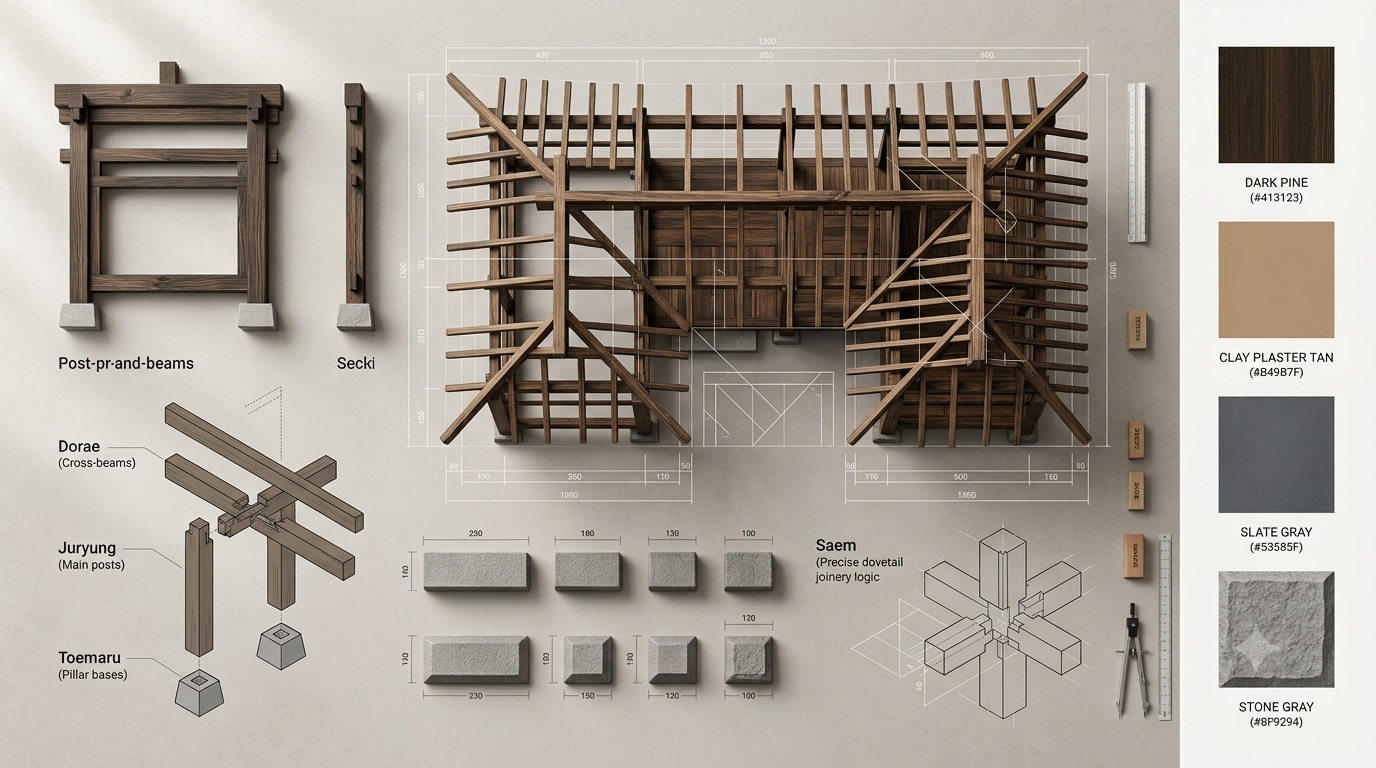
Pro Design Tip: When implementing a Hanok-inspired spatial grid in Figma or CSS, avoid using purely equal percentage-based columns. Traditional Korean timber frames intentionally vary pillar spacing between the central hall (Daecheong) and private rooms. Apply an asymmetrical 2:3 or 3:5 column hierarchy to create dynamic visual weight while maintaining structural harmony.
K-Aesthetics Series Guide
Explore Korean Traditional Design Assets
Discover RGB/HEX color codes, vector pattern analyses, and modern design inspiration for digital artists.
SEO Metadata Package
Suggested Image Alt Text: Traditional Korean Hanok wooden architecture grid framework showing timber post and beam structural system for UI UX layout inspiration
High-Search Volume SEO Tags:
Recommended Tistory Category: 미술·디자인


